Passed with flying colors

Our platforms pass the rigorous 'drop test'
Safety always comes first, especially when working at great heights. Within the scaffolding market, we increasingly see the demand for platforms to pass the "drop test". This is seen by users and suppliers as a major Unique Selling Point (USP).
But just how robust are our own platforms? We put them to the test in a series of intensive trials with our platforms.
What exactly is the drop test?
The drop test is designed to simulate extreme situations. The primary goal is to demonstrate the robustness of a platform in the unlikely event that a person were to fall onto it from a great height. For this, we have taken the strict, applicable standard EN12810-2:2003 for facade scaffolding as our starting point.
The test setup
The requirements for this test are anything but mild:
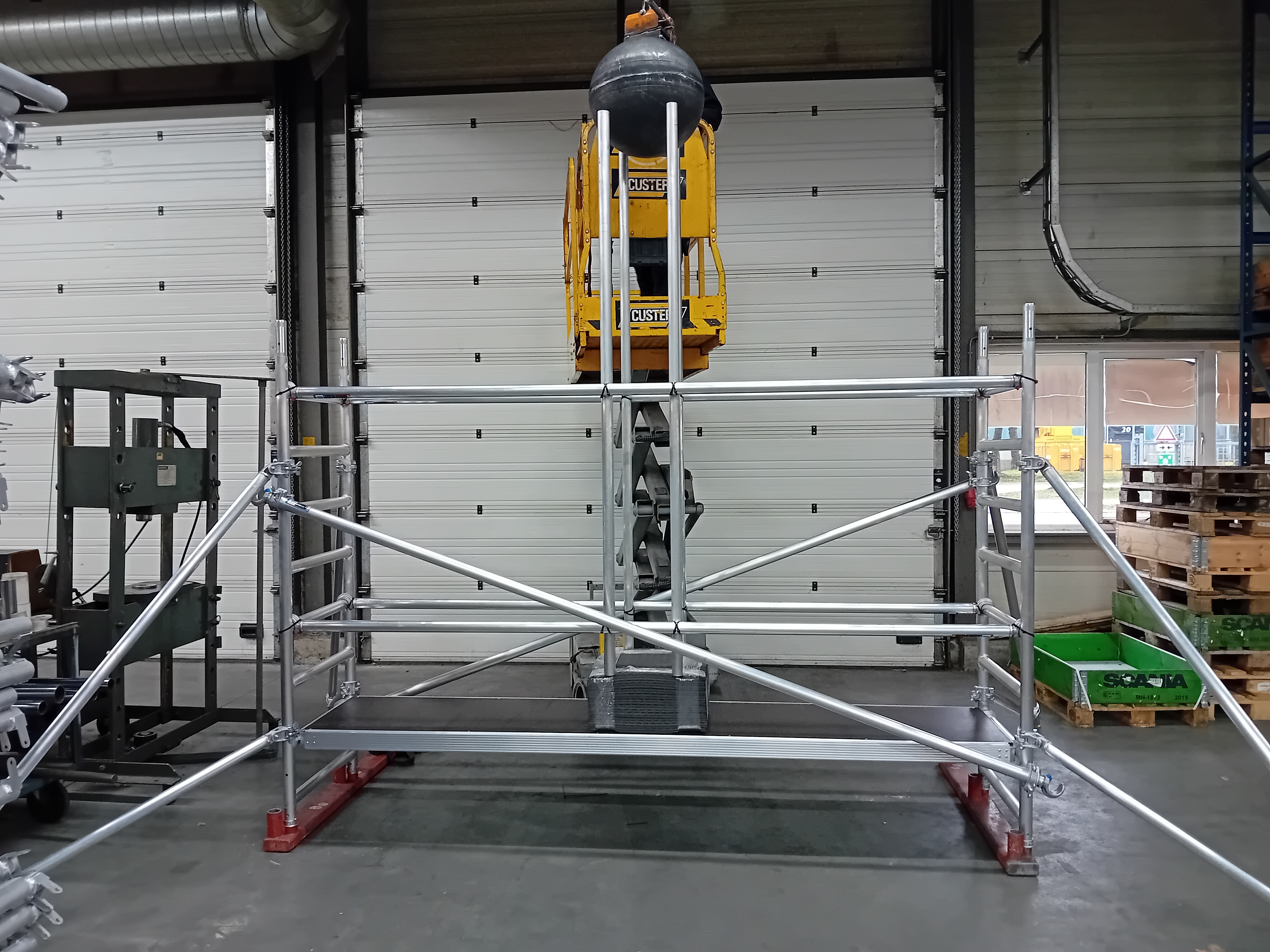
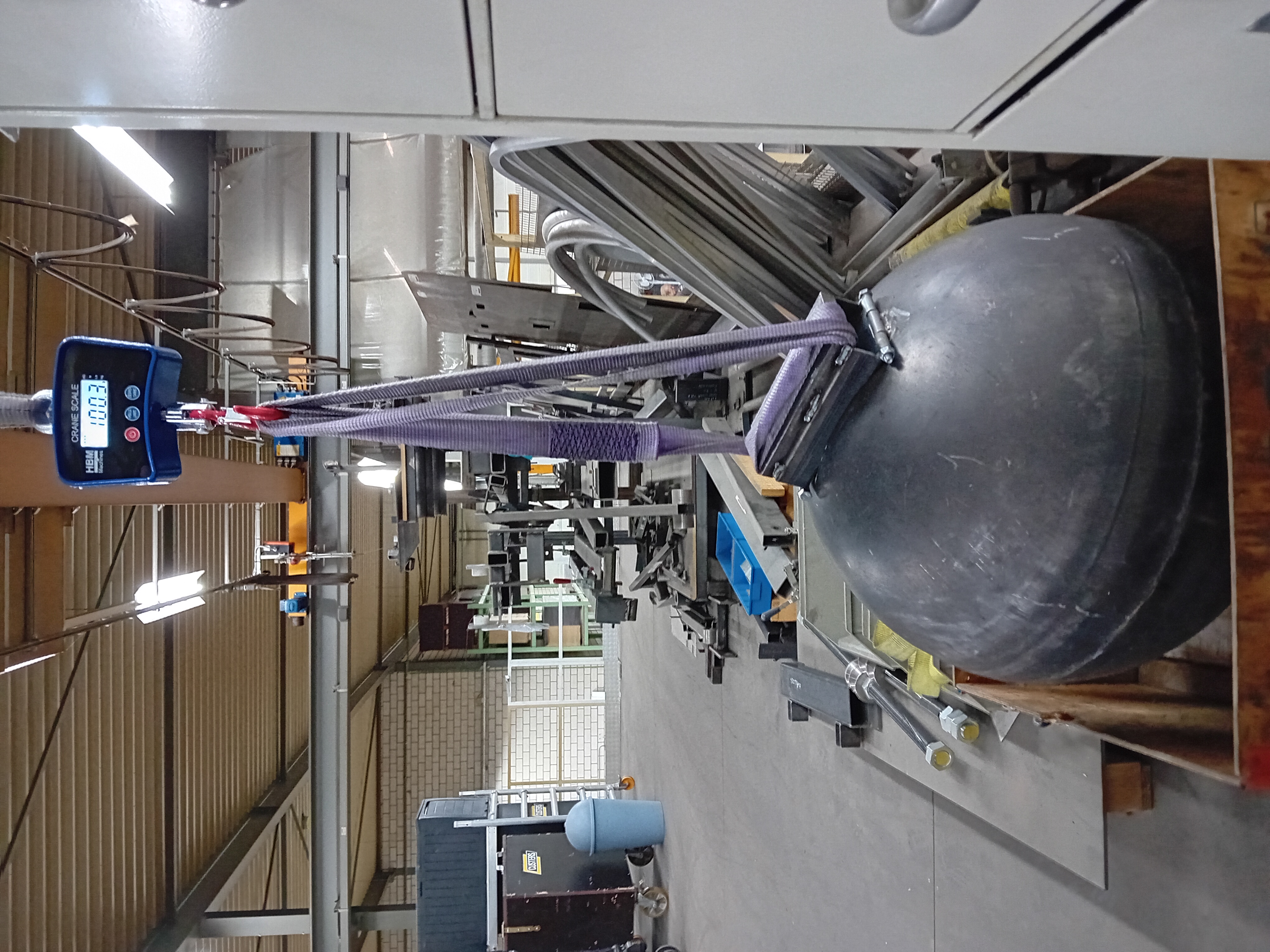
A steel ball (filled with sand and steel) with a diameter of 500 mm and a total weight of no less than 100 kg is used.
This heavy ball is suspended from an overhead crane using a lifting magnet and is dropped in a free fall from a height of 2.5 meters above the platform.
At the exact point of impact, we place a shock-absorbing cushion (maximum 500x500x250 mm).
The most important requirement to pass: the test is considered "successfully passed" if the platform can still support the static weight of the ball after the drop. Permanent deformation and local defects to the material are permitted.
The results: CR platform and Handy platform
We performed the test on both the CR platform and the Handy platform, where the impacts were delivered at various critical positions (PS1 and PM1). These were our findings:
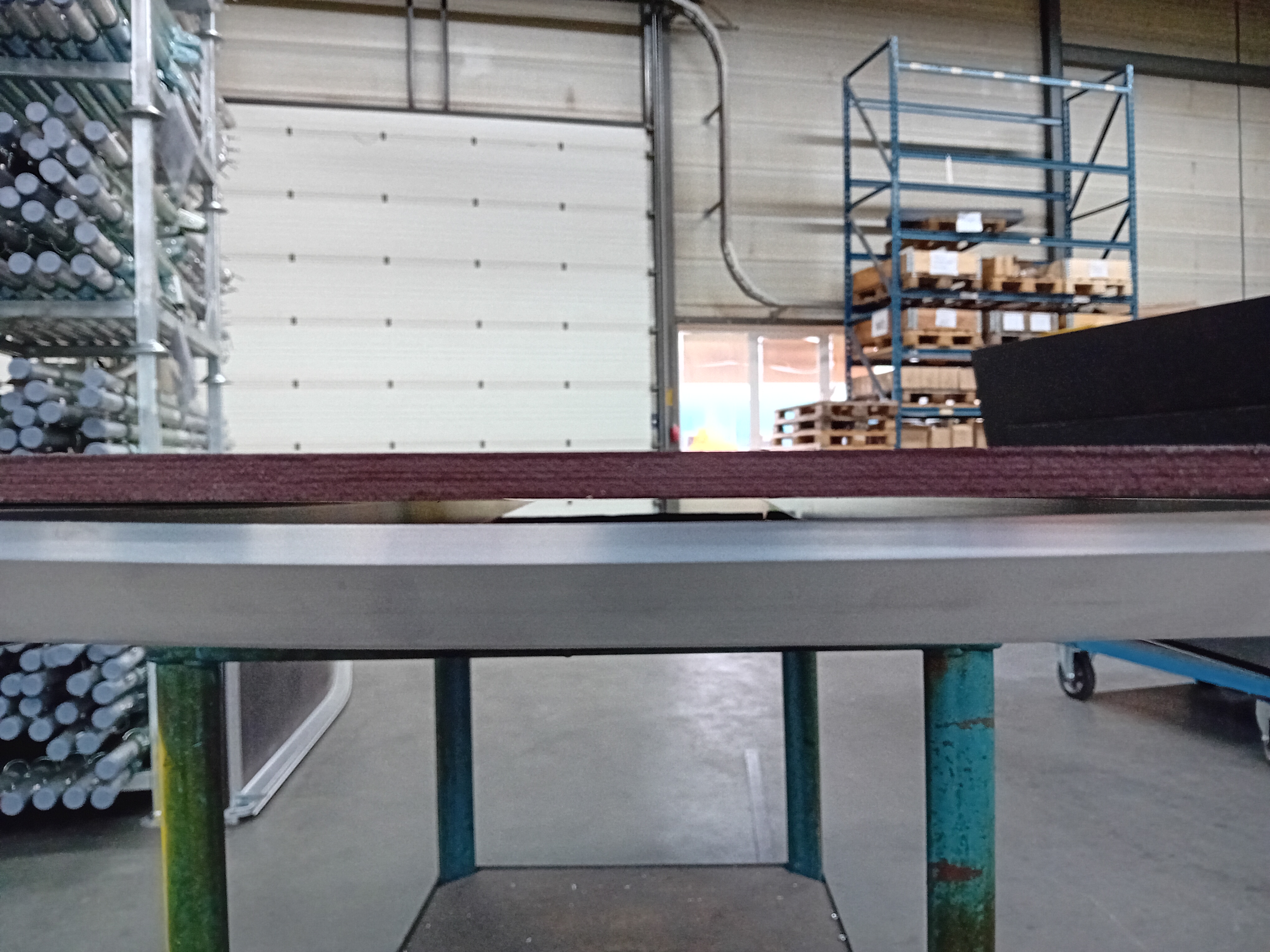
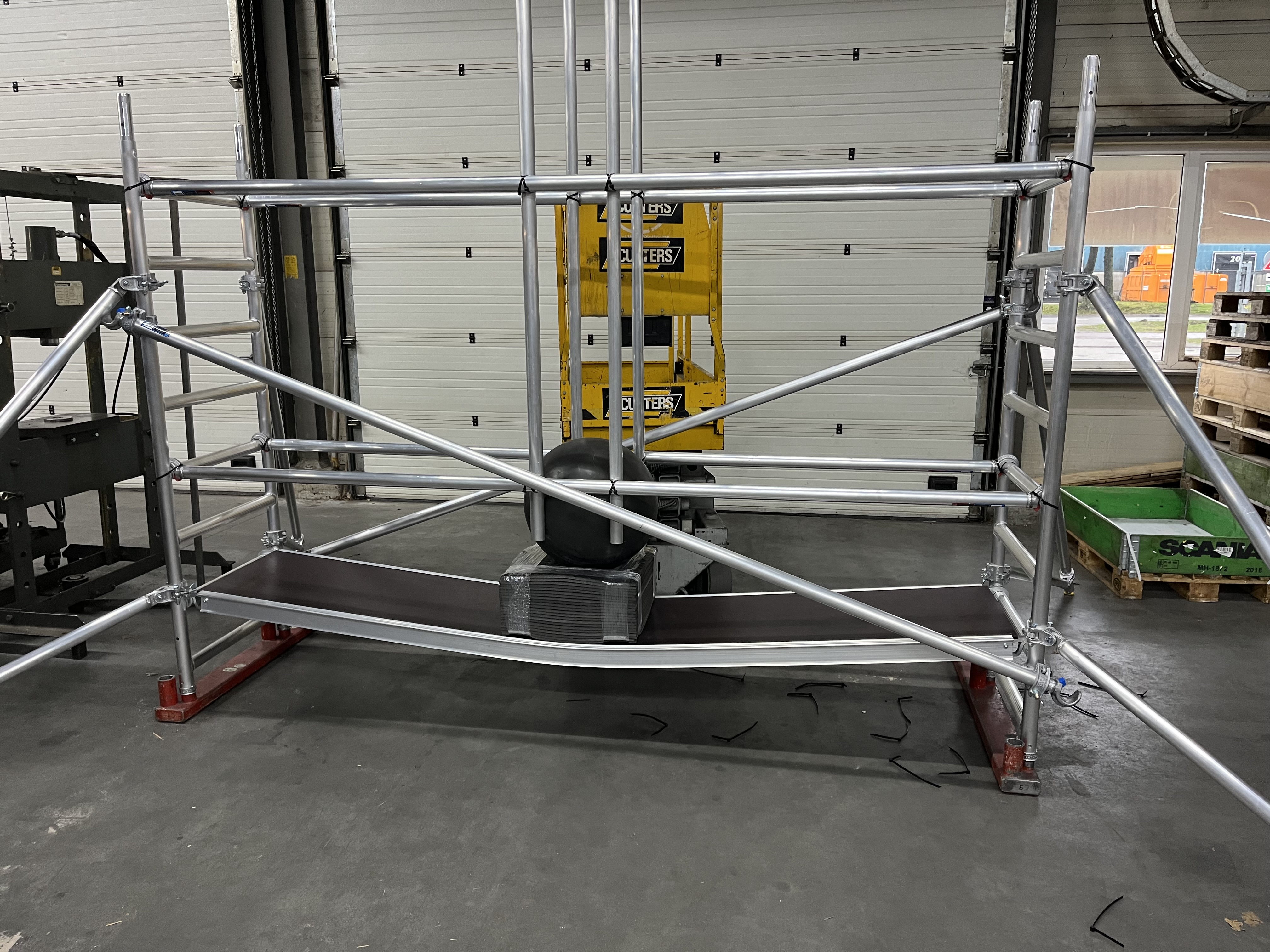
Impact on the CR platform: Although the platform was deformed after the impact, the ball simply remained on the platform after the test. During the heaviest impact (position PM1), the longitudinal profile bent by approximately 12.5 cm.
Impact on the Handy platform: This platform also absorbed the massive blow well. The platform deformed (approx. 9.5 cm deflection of the longitudinal profile), but the ball safely remained on the platform.
Strong core: Although there were understandably deformed components after these extreme impacts, these deformations were not extreme, and in no case did cracking occur in the load-bearing structure. After the impact, the platform was able to support the static weight of the ball without any problems every single time.
Conclusion: A safe choice
Given the consistent and positive test results, it has become clear that the construction of our platforms can absorb the forces of such a drop exceptionally well.
The final conclusion is therefore convincing: Based on the strictly executed tests, we can proudly confirm that all sizes of the CR and Handy platforms (with a maximum length of 3.05 meters!) fully pass the drop test according to the EN12810-2:2003 standard.
If you choose these platforms, you are choosing proven robustness and safety on the scaffolding!