
Aluminum scaffolds
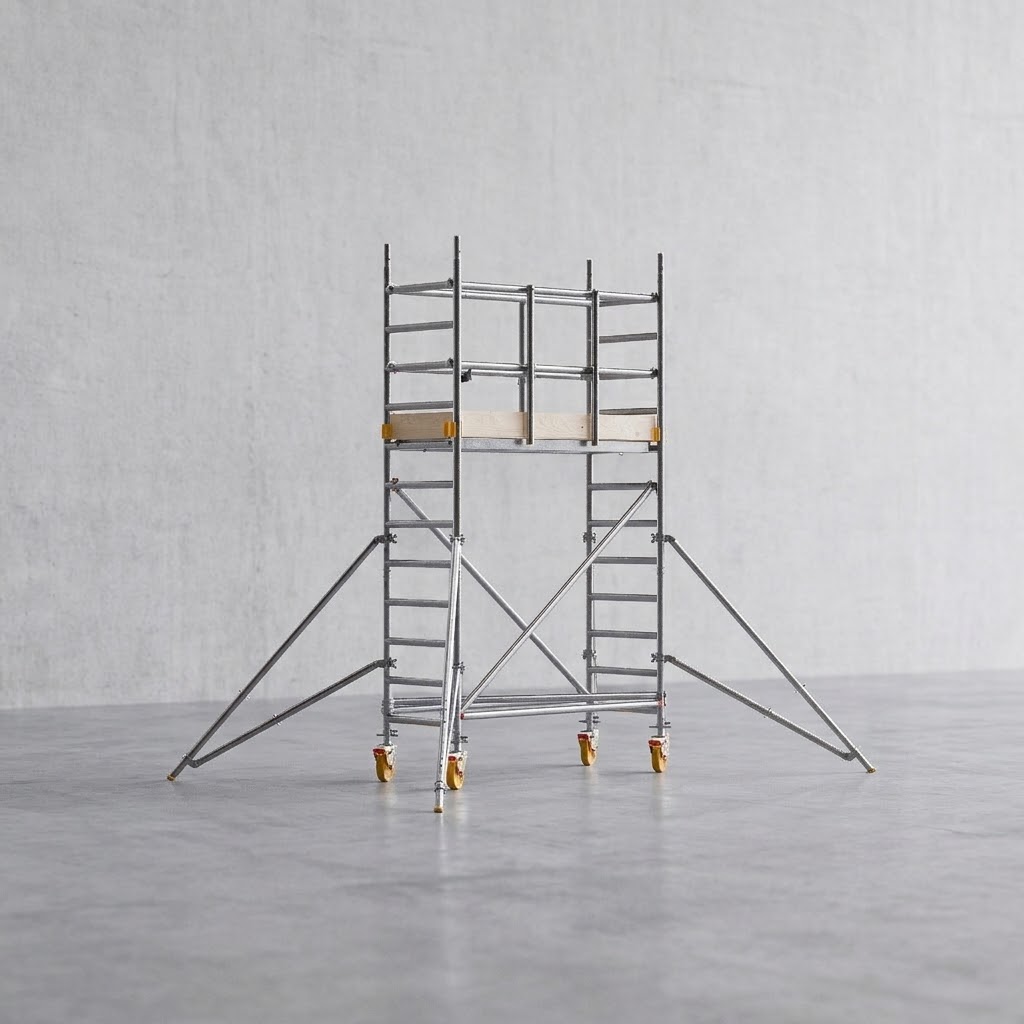
An aluminum scaffold is a lightweight structure used for working safely at heights. Thanks to their lower weight, aluminum scaffolds are easy to move and quick to assemble. You can use aluminum mobile scaffolds for painting, facade maintenance, or jobs around dormer windows, for example. Both professionals and private individuals regularly use these scaffolds, including special stairwell scaffolds for height differences or indoor work.
The advantages of aluminum scaffolds
Aluminum scaffolds are popular because of their low weight, rust resistance, and easy assembly. They offer greater ease of use compared to wooden scaffolds, which are heavier and require more maintenance. Aluminum variants also score better in terms of durability compared to steel scaffolds, which rust more quickly. As a result, they are an ideal choice for safe and long-term use, both indoors and outdoors.
What types of aluminum scaffolds does Custers have in its assortment?
Aluminum mobile scaffold: highly adaptable and easy to move
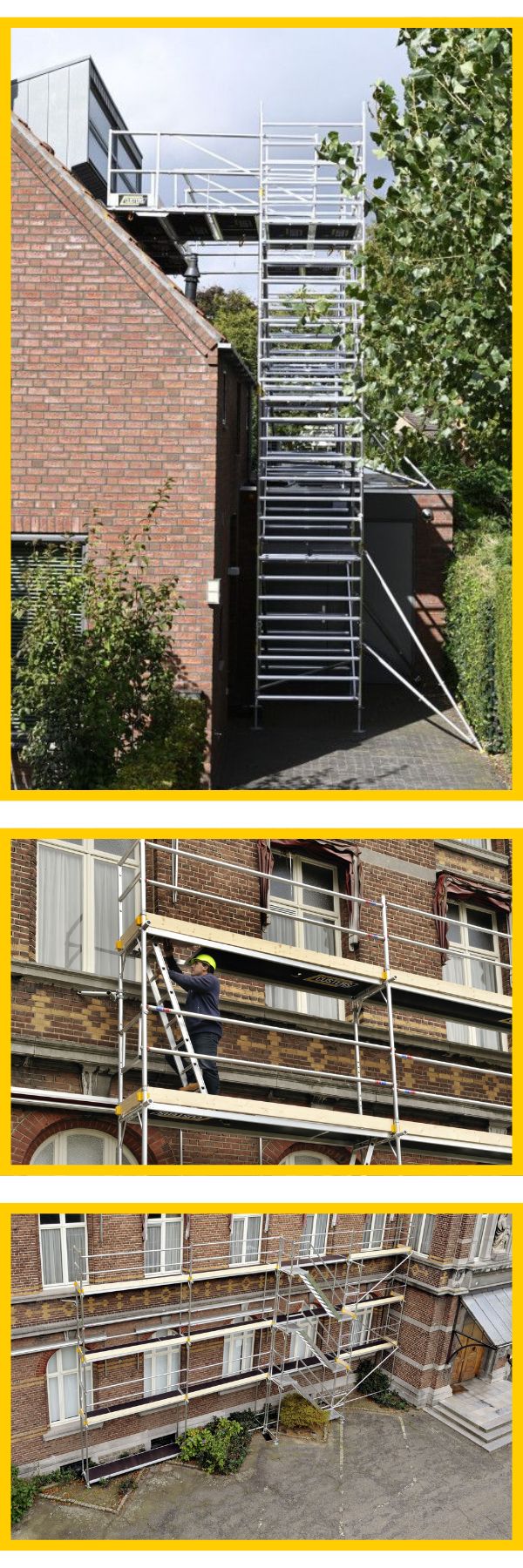
Facade scaffold: ideal for facade work and painting jobs
Dormer scaffold and roof edge protection: for safe working on roofs and dormer windows
Stairway scaffold: specially designed for working in stairwells or across height differences
Stair tower: safe vertical transport at heights
Folding scaffold: compact scaffold for quick assembly during smaller jobs
Walkways: safe connections between scaffolds or platforms
CR or Handy? Working at heights requires scaffolds that are strong, safe, and efficient. Choose our Handy series: robust and stable, ideal for heavy-duty work and intensive professional use. Or go for the CR series: lightweight, maneuverable, and efficient, making it a cost-effective choice for flexible jobs. Perfect for situations where speed and mobility are key, without compromising on safety.
The components of both series are fully interchangeable. This allows you to easily combine the strength of the Handy series with the lightweight nature of the CR series, without making concessions on safety or quality. This makes your investment highly flexible and future-proof. Read everything about the differences between these 2 series here.
How do you choose the right mobile scaffold for your project?
When choosing the right mobile scaffold, you need to consider the working height, platform dimensions, and the location of your job. A facade scaffold or window scaffold is suitable for painting or facade maintenance. If you are working indoors in a stairwell, a stairwell scaffold is necessary. For work on roofs or dormer windows, you are more likely to choose a dormer scaffold with specific height and stability.
What is the difference between a facade scaffold and a dormer scaffold?
When do you choose a facade scaffold?
You primarily use a facade scaffold to safely carry out maintenance or renovations on facades. These scaffolds are wide and suitable for working at various heights during painting or facade insulation, for example.
In which situations is a dormer scaffold the best choice?
A dormer scaffold is specifically designed for work around dormer windows or pitched roofs. Thanks to adapted components and stable platforms, this scaffold offers optimal safety and accessibility on pitched roofs.
What width should my mobile scaffold be?
Custers mobile scaffolds are designed in two fixed widths to provide professionals with a safe base in any work situation. The narrow variant has a frame width of 70 cm, making it extremely maneuverable and ideal for work in confined spaces where the scaffold may need to pass through doorways. For projects that require more freedom of movement or where a lot of material is needed directly on the scaffold, there is the wide version with a frame size of 130 cm. Both robust widths can be flexibly combined with various platform lengths, including 180, 250, and 305 cm. This ensures that a highly stable and appropriate setup can be achieved for any specific job, from large-scale facade maintenance to work in narrow alleys.
What are safe assembly methods?
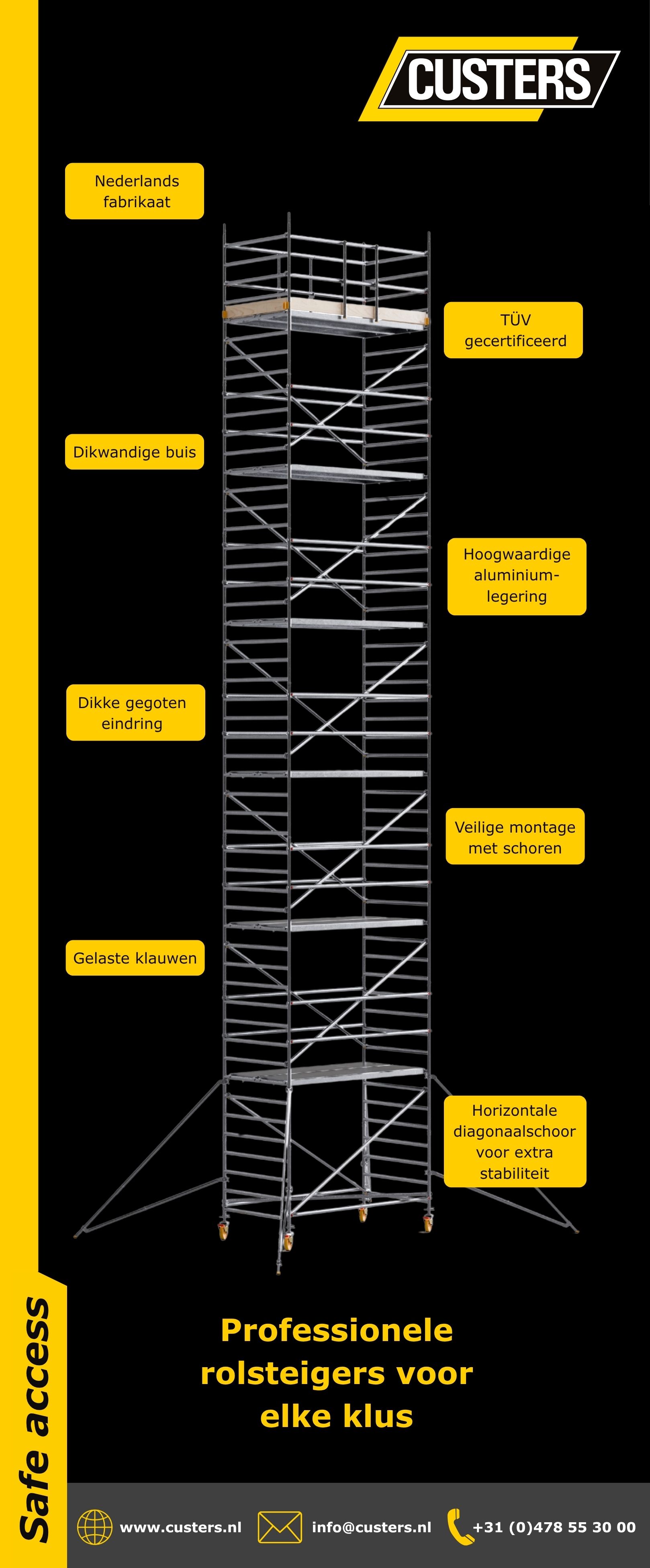
Custers uses safe assembly methods such as Safe Guard and Mobile Guard to guarantee safety during the assembly and dismantling of aluminum scaffolds. With these systems, you always install guardrails first before stepping onto the next platform. This minimizes the risk of falling, which is especially important for scaffolds used by private individuals, as they often have less experience with scaffolding.
Does Custers comply with standards and certifications?
Custers complies with strict standards and certifications to guarantee the safety and reliability of aluminum scaffolds. These include legal requirements such as the EN 1004 standard for mobile scaffolds. By regularly conducting independent inspections and tests, customers can trust that the offered scaffolds—such as facade scaffolds, dormer scaffolds, and stair towers—meet the highest safety standards. This provides users with certainty and reduces the risk of accidents while working at heights.